
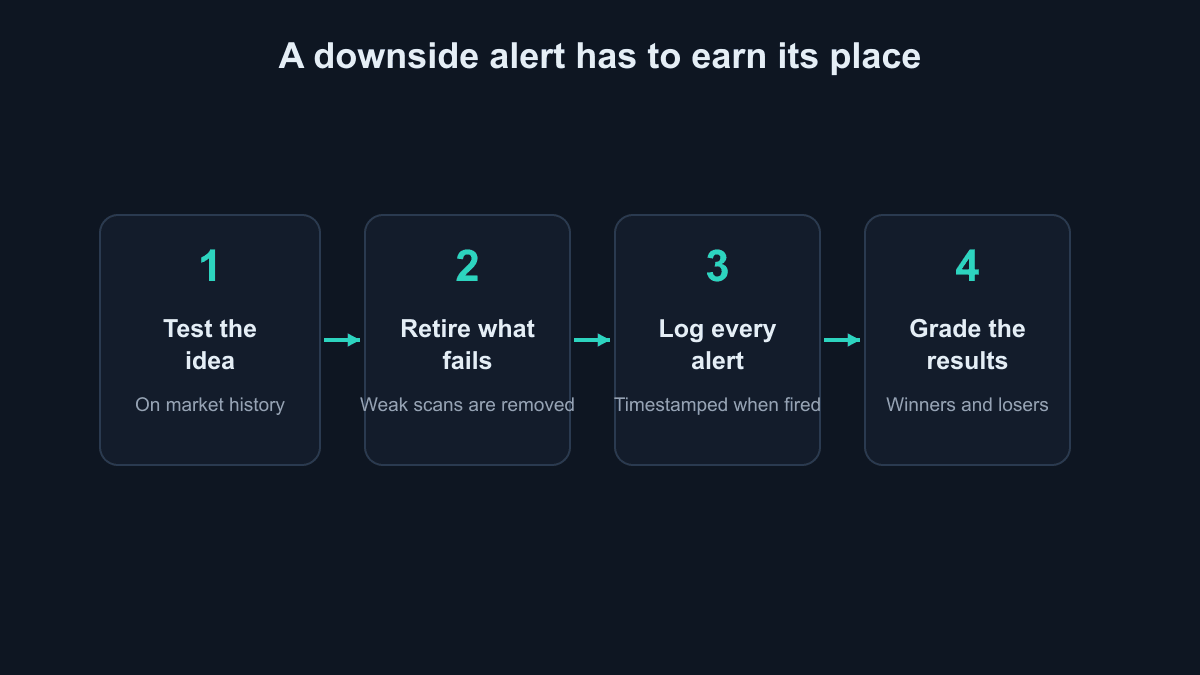
Here is an uncomfortable truth we found when we tested our alerts: a lot of "bearish" scans actually fire on stocks that go up. Markets rise more often than they fall, so a signal that just looks weak will be run over much of the time. We retired the scans that did not hold up.
Why bearish signals are so difficult
- The market has an upward drift. Short positions start with the odds slightly against them.
- Strong stocks can stay strong. A stock that looks too expensive can get far more expensive.
- Drops are sharp and uneven. Timing a decline usually matters more than timing a rise.
- Good news hits shorts hardest. An upgrade or a strong earnings report can erase days of decline in minutes.
What Bear Exhaustion Short is built for
Bear Exhaustion Short is our dedicated downside alert. It looks for stocks where an advance may be running out of steam, and it pays attention to what the broader market is doing. It is meant to be selective, so it will not fire on every weak-looking chart. The exact rules are private.
Like every alert we run, it is logged when it fires and graded afterward. You can review how alerts have done on the public Alert Results page.
Puts or short stock: two ways to act on a downside alert
There are two common ways to trade a stock you expect to fall, and they carry very different risks.
- Short selling means borrowing shares, selling them, and buying them back later. If the stock falls, you keep the difference. If it rises, your loss has no fixed limit. Short sales need a margin account, the shares must be available to borrow, and you may owe borrowing fees and any dividends paid while you are short.
- Buying a put gives you the right to sell shares at a set price before a set date. Your maximum loss is the premium you paid. The trade-off is time: if the drop comes too late, the put can expire worthless even when you were right about direction.
Some traders use a put spread instead, buying one put and selling a lower one. It costs less than a single put but caps the profit at the lower strike.
How to manage risk on a downside trade
- Decide how you will express it. Choose between puts, a put spread or short stock before the alert fires, not after.
- Set your exit before you enter. Know the price that proves the idea wrong.
- Size for being wrong. Downside moves can reverse quickly, especially on good news.
- Watch implied volatility. Puts often get expensive after a stock has already started falling.
- Check the calendar. Earnings can overwhelm any technical setup.
Common mistakes with bearish trades
- Shorting a stock only because it went up a lot. Strength alone is not a reason for it to stop.
- Adding to a losing short. A stock moving against you is information, not a discount.
- Holding through earnings by accident. Know the report date before you open the trade.
Is it right for you?
Downside alerts tend to suit traders who are comfortable with faster moves and clear exit plans. If you are new to options, start with our options basics guide, and read how to hedge a portfolio if you want protection rather than a bet against a stock. You can see which alerts come with each plan on the pricing page.
Sources and further reading
This article is educational and is not investment advice.